Heeseok Heo | Software Architect
Software Architect with 20+ years of experience in 3D geometry, medical imaging, CAD/CAM, industrial AI, digital twin, and Physical AI platforms.
© 2025 - 2026 Heeseok Heo
Software Architect with 20+ years of experience in 3D geometry, medical imaging, CAD/CAM, industrial AI, digital twin, and Physical AI platforms.
Physical AI 학습을 위한 데이터 생성, 시뮬레이션, 강화학습 환경을 설계했습니다.
Python, PyTorch, Docker, Isaac Sim, Isaac Lab, Trame
제조 공정 운영 최적화를 위한 강화학습 모델과 시뮬레이션 기반 학습 환경을 개발했습니다.
치과 임플란트 수술용 Guide 설계 플랫폼을 개발했습니다.
C++, Qt, ITK, VTK, OpenGL, DCMTK, OpenMesh, Python, WebAssembly
Computer Graphics 연구와 의료영상/산업 데이터 시각화 경험을 기반으로 3D Geometry 처리 및 고성능 Visualization 시스템을 개발했습니다.
/volview//volume-picker/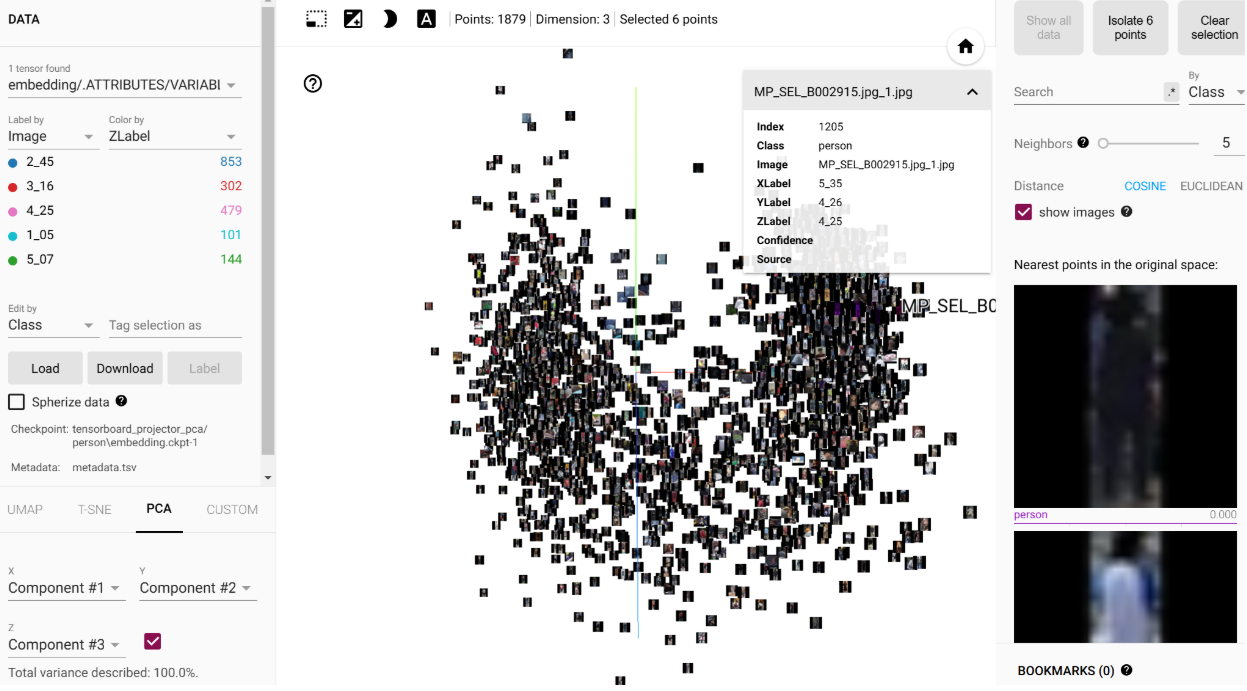
WORK EXPERIENCE
2023.04 ~ Now, Pebblous.
Project Achievements and Progress Summary
Until July 2024, I focused on developing the Supply Chain Planning (SCP) engine. I built and tested the LP/PP (Long-term Planning/Production Planning) integrated planning engine along with the testing environment. The SCP engine models the SCM (Supply Chain Management) system through surrogate modeling and utilizes AI to determine key policies based on the environment’s conditions. It handles order forecasting, corporate order allocation, order prioritization, and LP/PP policy decisions. The engine simulates the SCM system according to predefined policies and generates the Master Production Plan. The environment conditions are ideally derived from market situations and profit estimation plans but can be simplified to product priorities, due dates, and resource constraints.
Starting from August 2024, I participated in developing the On-Site Quality Evaluation System called Wangjin Kit for Data Clinic’s on-site quality evaluation platform, running on Windows OS. To minimize modifications to the existing Linux-based Data Clinic environment, Windows WSL2 was adopted. This enabled a fast and efficient upgrade from Davom_1.3 to Davom_1.4. The Wangjin Kit includes Auto-login settings, Startup configurations, account privilege settings, and XML-RPC services, making it adaptable for on-premises Data Clinic development. Additionally, I recommended the PyArmer Python code security solution, creating a dual-layer protection environment for Data Clinic source code.
From October 2024, I have been working on the Knowledge-based Exception Agent for Static Modeling and Auto Routing algorithms. This project involves optimal path search and probability-based re-search techniques on graph structures (Nodes and Edges). However, this process demands high computational resources, significant memory usage, and is highly sensitive to initial parameter settings. In high-dimensional problems, the search performance decreases, optimization speed slows, and parameter tuning becomes increasingly complex. To overcome these challenges, I am developing a High-Dimensional Data Navigation System that integrates vector search, clustering analysis, representative cluster detection, and anomaly group detection.